With our stories, we can do anything. We can rewrite the world together.
For a long time I believed in the ladder. That if I was patient enough, generous enough, good enough at my little work at my little desk, I would be recognized by the people and institutions I'd put on pedestals. Then I could do bigger work and feel like I was making a "real impact."
I wrote their missions. I built their messaging programs. I gave language to visions that weren't mine, for organizations I wanted desperately to believe in.
Losing my faith in the organizations, institutions, and systems I grew up with wasn't dramatic. It was more like a slow, embarrassing reckoning with how much of myself I had subcontracted out to other people's stories, and how angry I was, and how much of that anger was actually at myself for knowing better and going back for more, just because I couldn't imagine anything different yet.
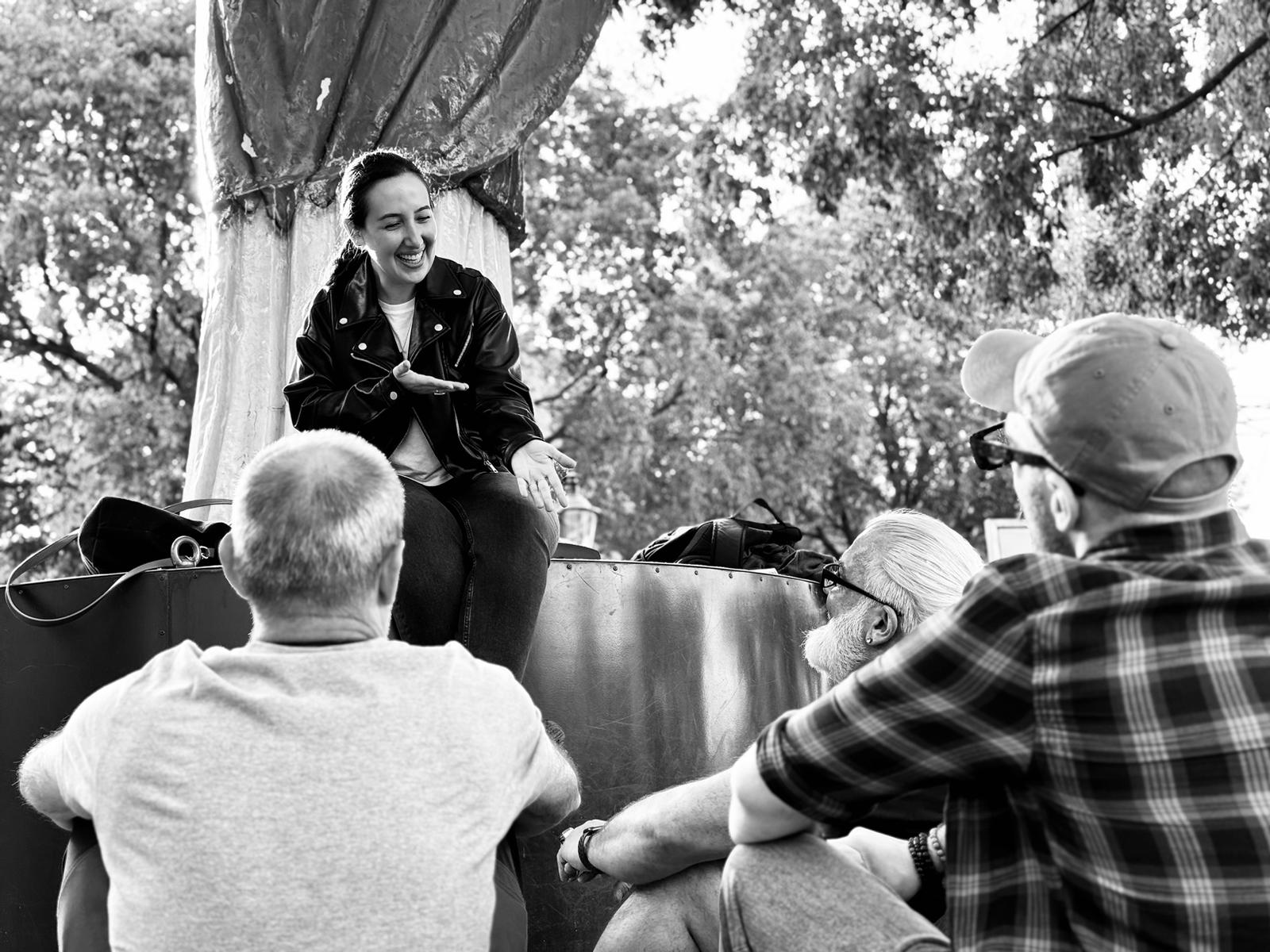
But I had big visions! I had (*looks up and counts on fingers) allll these years of experience!
When strategy stopped working
So I finally went out and did my own thing. And I had the HARDEST time building my own brand. Every day I banged my head against the wall of own limiting beliefs, thinking that if I just focused hard enough I could make my entire purpose — my calling — fit into a neat messaging architecture. I had done it for hundreds of others. Why was it so impossible now?
Maybe you recognize some of this. You've poured your magic into institutions or leaders you wanted to believe in, giving your best thinking to visions that weren't entirely yours. You keep wondering why it's so hard to bring that same clarity and devotion to your own work. If you've ever wondered why the strategies you've used to grow other people's businesses feel like they collapse when you turn them on yourself, you're not alone.
I was so used to believing in others, trusting in and holding someone else's vision for them. I really believed in the genius and integrity of every single founder whose guiding principles and messaging we wrote. I believed they were all doing something different, special — until I watched those cultures crumble and blow away as the c‑suite made more money. I stopped believing it was possible to maintain a thriving business operation with a thriving culture centered around purpose.
My ego really wanted to disprove this for my own business: Maybe the hustle would eventually feel right if I just reframed it? Maybe alignment was a mindset trick, not a structural truth? But no amount of mindset work could make extraction feel like devotion.
I also realized there was a harder problem to look at: I'd internalized the stories that told me to stay small, quiet, and dependent. That all I was good for was doing my little work at my little desk, earning just enough to keep buying into the market's promises.
Rethinking inherited stories
Within the next few years I devoted myself to learning about the systems underpinning our shared reality. I trained as a Jungian coach to explore the deep structures of psyche and story: how symbols, archetypes, and unconscious patterns quietly script our choices long before we decide who we are, what we believe in, and what we need. I learned tools to help me peek under my ego to make my unconscious motivations conscious. I studied post‑capitalist theory and regenerative business to understand how our economic myths shape what feels possible for our lives and livelihoods.
At the same time, the bill for late-stage capitalism came due with Covid, authoritarianism, climate collapse, war, mass murder, extreme polarization and the end of what we understood as truth. More of us started to wake up to the reality that we've been sold a lie.
Imagining new possibilities
That's when I realized I was trying to build a liberatory business on top of a methodology designed for domination. Traditional business and brand strategy is built on competition, differentiation, and capturing attention inside late-stage capitalism; it assumes someone has to lose for you to win. I realized I wanted no part of building brands that win by asking someone else to lose. The purpose of my livelihood felt much too expansive and generous for that.
So I made the choice to stop polishing that system. I'm here to help rewrite it with other next-economy builders who want their livelihood businesses to be instruments of reciprocity, not weapons of extraction.
In our work together, joy is the vibe and a signal. It's the emotion that leads you into the work you're here to do in the world, and we follow it through creative play and practice. I bring a Jungian, story-first process I've spent decades refining — a repeatable arc that moves from inner work to outer articulation. We witness what has charge, mine the story material underneath it, shape it into a coherent narrative system, and translate it into the language of your life's work. We co-create it, lifting and expanding each other as we go.
Your expertise is not any institution's property. Your years of thinking and questioning and building knowledge in the margins of systems that weren't designed for you: that belongs to you. And there are people outside those walls who need the stories you've lived and the wisdom you've earned.
You don't have to purpose-wash. Purpose-washing is over. It died with our trust in the leaders and systems who were supposed to protect and uplift us.
It's us. We're the heroines of our own mythologies, and it's my joy and calling to help us write ourselves that way.